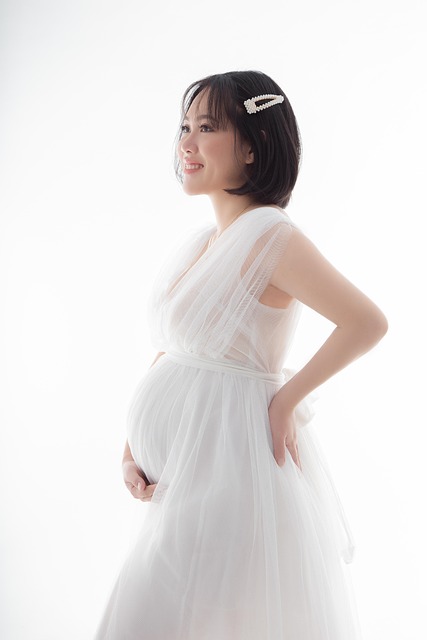
I’m a mother to a lively 3-year-old named Leo, a proud military spouse, and I’m expecting my second child this September. I also happen to have a rare form of dwarfism known as diastrophic dysplasia, which means I’m almost the same height as my son. Despite my condition, I’ve never let it define my life; I’ve always carved my own path. At 15, I made the bold decision to undergo limb lengthening surgery to gain independence. Initially told I’d only add 3 inches, I ended up growing 14 inches, allowing me to stand tall at 4 feet 10 inches.
When it comes to motherhood, many assume that having children is an impossibility for someone with diastrophic dysplasia. Surprisingly, my sister-in-law offered to be my surrogate before my husband, Jake, and I even contemplated parenthood. However, when Jake returned from a yearlong deployment, we discovered that having a family was indeed within reach. Leo arrived weighing 6 pounds, 10 ounces—well above the 3-pound goal set by my doctors. Overcoming doubts and challenges has kept my outlook on parenting optimistic.
Every time I venture out with Leo, whether it’s to a restaurant or the grocery store, I can feel the curious stares from onlookers thinking, “How does she manage it?” Beneath their curiosity, some might be eager to learn more about our lives. So, I’ve decided to clarify the top five questions people are often too shy to ask about parenting with a disability, which might just inspire and surprise you.
How did you have a baby?
One day, a neighbor asked me, “Who’s the little boy you’re babysitting?” It took a moment for me to realize he was talking about Leo. I spent a good while convincing him that Leo was my son, and it left me pondering why it was so hard for him to believe. It dawned on me that his confusion wasn’t malicious; he was simply perplexed. The truth is, I often wonder how I managed to have a baby myself. I needed assistance with basic tasks, struggled to breathe, and relied on a wheelchair. When a capable friend expressed her pregnancy struggles, it became clear that the challenges of pregnancy are universal, transcending any disability. Perhaps all mothers—regardless of size, shape, or ability—should ask themselves the same question: How do we do it?
How do you discipline when your child is more physically capable?
By 9 months, Leo was nearly running, and by age 2, he could reach places I couldn’t. His agility is impressive, but it complicates discipline. I often rely on my most developed asset—my mind. Leo craves attention and tries to please, so when I choose to ignore certain behaviors, he stops to reconsider his actions. I’ve learned to observe closely and understand what motivates him. My disability, in this case, can be an advantage. I’ve seen my husband, a fitness enthusiast, struggle to keep up with Leo, prompting him to ask for my advice on discipline. I love to remind him, “Brains over brawn!”
What are your biggest fears as a mother with a disability?
I find this question challenging, not because it’s too personal, but because the list of fears is extensive. As a child, I was plagued with worries, leading to a stress ulcer by the age of 12. As a mother, my concerns have only multiplied. Am I providing Leo with the best opportunities? What if he runs away from me? Or worse, what if he gets hurt? None of these fears are exclusive to my disability; they are simply part of being a parent. When Leo learned to manipulate the front door, my heart dropped when I realized he was halfway down the driveway. Luckily, a neighbor helped me chase after him. In that moment, we were united in our instinct to protect, not divided by blame. A good mother worries, learns, and prepares for future situations. A great mother embraces all of that without apology.
Does Leo notice your disability?
When we go out, I often use a wheelchair, and Leo eagerly takes the reins, pushing me around. I wonder whether he helps because he’s seen his dad assist me or if he genuinely notices my differences. What I do know is that he’s happiest when I engage with him and his interests. My childhood teachings about differences being less significant than we make them resonate. One day, Leo may recognize my unique way of navigating the world, but if I instill in him that my disability doesn’t define my capabilities, he will see me as equally capable.
What about those awkward questions from kids?
While at Leo’s swim class, a little girl asked her mom, “Why is she so small?” At the store, another child queried a cashier about her missing teeth. The parents were mortified, but I see these questions as opportunities for understanding. Children are naturally curious and seeking to make sense of their surroundings. My mother always reminded me, “It’s not always about you.” Yes, the questions can be annoying and random, but they come from a place of innocence. I reassured the mom at the pool that it was a valid question and explained, “I’m small because my bones don’t grow.” Her smile showed that the answer resonated with her.
As Leo grows and we encounter more people in various settings, more questions will arise. My perspective on motherhood will continue to evolve, and I look forward to the day when Leo can advocate for himself. There’s no manual for parenting, especially not for parenting with a disability, but adapting and overcoming is something all parents share in common.
In summary, parenting with a disability comes with its unique set of challenges and triumphs. From overcoming physical limitations to navigating the curious questions of others, each experience contributes to the journey of motherhood. Whether through resilience or adaptability, the essence of parenting remains the same: love, learning, and growth.
Keyphrase: Parenting with a disability
Tags: home insemination kit, home insemination syringe, self insemination