When my partner and I first explored adoption from China, we learned that the wait for a child could stretch up to six years. It felt as though our journey was over before it even began. Fortunately, our agency introduced us to the special needs program, which promised a shorter waiting time. My immediate reaction? Absolutely not.
The term “special needs” intimidated me. It felt like a label reserved for those who were strong enough to face those challenges—something I wasn’t sure we could handle. I had seen parents who embraced special needs adoptions, but I didn’t think we were cut out for that. However, before we dismissed the idea entirely, we decided to educate ourselves about what we were potentially turning down.
The range of conditions listed in the China special needs adoption program varies significantly—from minor issues, such as a missing thumb, to more complex medical conditions like Spina Bifida. Families have the opportunity to select which medical needs they are comfortable addressing. After conducting some research and taking several deep breaths, we took the plunge into special needs adoption.
It’s tough to reconcile the fact that some cultures view slight physical imperfections as special needs. I don’t mean to criticize this perspective; rather, I mention it to help reframe how you might view special needs adoption for your family.
Early in our “paper pregnancy,” we received a list detailing various needs and conditions. One of the options was “limb differences.” Unsure of its meaning, I consulted my trusted resource, Dr. Google. I learned that limb differences can be congenital (present from birth) or arise from injury or disease that necessitates amputation. I thought, “We can manage that,” and checked the box. A few weeks later, I found myself captivated by a photograph of a seventeen-month-old boy with a “congenital hand abnormality.” I fell head over heels for this little one.
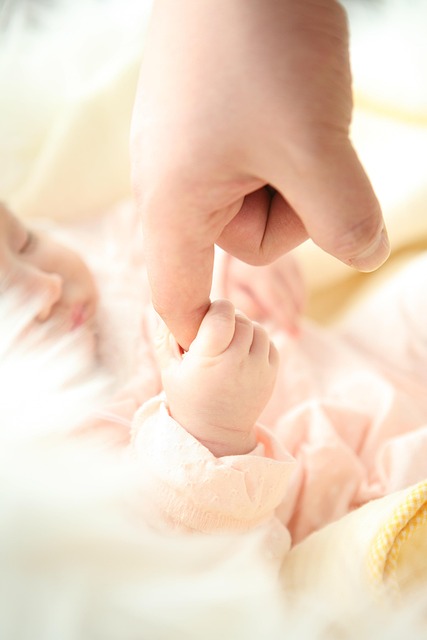
Now, my son is four and he’s missing his right hand, which has a stub and four small finger nubs. I find myself frequently saying “Get down!” and “Don’t touch!”—not unlike any other mother of a spirited young boy, right? He climbs ladders, catches balls, and somehow manages to open everything he shouldn’t. He’s taken toys from his brother, teasingly holding them out of reach until his sibling cries. I can’t help but feel a sense of pride. Just the other day, he got in trouble for covering my Kindle in lotion and pretending it was a baby. I’ve used many colorful adjectives to describe my energetic boy—with “handicapped” never being one of them.
My son is learning to adapt his environment to fit his unique anatomy. While buttons and shoelaces can be tricky for him, he has already mastered push-ups at age four. I have no doubt that he will achieve whatever he sets his mind to.
One of the biggest challenges of parenting a child with a limb difference is managing my reactions to others’ stares and comments. Children are naturally curious and often ask questions like, “Why?” or “Is it an owie?” Most adults recognize it as a congenital condition, but kids take my explanation of “this is how he’s made” at face value, then get back to climbing the jungle gym or reclaiming toys from my little grabber (we’re working on that).
Occasionally, we encounter rudeness or ignorance. One time, a seven-year-old shouted, “OMG, did you SEE that kid’s hand?” loud enough to be heard miles away. Another time, a woman on the bus reacted as if she’d encountered a mythical creature, exclaiming, “How gross!” It’s tough to remain composed and not lash out at these people (though tripping them and pretending it was an accident does cross my mind). Even though my instinct is to rush to my child’s defense, I refrain from doing so. If I intervene every time someone makes a thoughtless comment, my son won’t learn to navigate a world where some people can be unkind.
He will have to find his own way to respond to comments, especially the hurtful ones. We all want life to be easy for our children, and sometimes it’s tough to see him standing out when he’d prefer to fit in. While his limb difference isn’t always the first thing people notice, it eventually comes to their attention. Reactions vary from indifference to friendly curiosity, with outright meanness being rare. Thankfully, he hasn’t faced teasing yet, but I know that day may come—probably when I’m not around to witness it (kids are sneaky like that).
There’s no “cure” for limb differences. While future technology might allow for limb regeneration, we’re not there yet. I can’t think of anything he can’t do that would be improved with a prosthetic, so we’re holding off on that decision until he’s older. A cosmetic, semi-functional “slip-on hand” is an option for the future, but we’re leaving those choices in his hands.
He affectionately refers to his little hand as just that—his “little hand.” Right now, he’s more than happy to show it off if anyone is curious, casually stating, “It’s just my little hand,” before moving on to compliment someone’s outfit or ask if they have candy in their bag. We sometimes call it his “lucky fin,” a nod to Nemo. This is how I explain his limb difference to other kids. I’m grateful that Disney has introduced more relatable role models for those with limb differences, as we used to rely on Captain Hook—who, let’s be honest, isn’t exactly a role model.
For more insights into fertility and pregnancy, check out this excellent resource on artificial insemination. Also, if you’re interested in boosting fertility, you can find helpful information on fertility supplements and fertility boosters for men.
In summary, embracing the journey of parenting a child with limb differences can be as rewarding as it is challenging. Through education and understanding, families can find joy and fulfillment in their unique experiences.
Keyphrase: Special Needs Adoption
Tags: [“home insemination kit” “home insemination syringe” “self insemination”]